
Scale and Proportion in Home Decorating: The Rules That Make a Room Feel Right
Scale and Proportion in Home Decorating: The Rules That Make a Room Feel Right
Have you ever walked into a room and immediately felt comfortable — without knowing exactly why? The furniture fit the space. Nothing felt crowded or awkward. Everything just worked.
That feeling almost always comes down to scale and proportion.
Scale is how large or small something is compared to the room around it. Proportion is how all the pieces in a room relate to each other. When scale and proportion are working together, a room feels calm and balanced. When they're off, even expensive furniture can make a space feel uncomfortable — and most people can't explain why.
Wendy Langston, founder and CEO of Everything Home Designs in Carmel, Indiana has spent more than 25 years helping families get scale and proportion right. She says the problem shows up in nearly every home she walks into — and people feel it before they can name it. "It creates this disconnected feeling that people sense even if they can't quite name it. The furniture can look lost or crammed."
The good news is that a few simple scale and proportion guidelines can help you avoid the most common mistakes and create rooms that feel welcoming and balanced.
Why Scale and Proportion Matter in Every Room
Scale and proportion aren't just design terms. They describe something you experience every time you walk into a room. When the scale of your furniture matches the size of the room, the space feels intentional.
When the proportions of your pieces relate well to each other, the room feels cohesive. When either one is off, something feels wrong — even if you can't put your finger on it.
Getting scale and proportion right is one of the most impactful things you can do in any space. It doesn't require expensive furniture or a full renovation. It just requires understanding a few key relationships and making decisions with those in mind.
The Most Common Scale and Proportion Mistake
The most common scale mistake is choosing furniture that's too big or too small for the space it's going into.
A large sectional in a small living room throws off the scale of the entire space and blocks natural traffic flow. Small furniture in a large room creates the opposite proportion problem — pieces float around without purpose and the space feels empty and disconnected.
Wendy sees this play out differently depending on the neighborhood. In newer Carmel builds like Holliday Farms, homes have generous, open floor plans. "People buy what would have been 'normal' sized pieces for a smaller home and they just disappear in the room." In older homes near the Arts & Design District, the proportion challenge flips. Lower ceilings and cozier rooms mean oversized furniture can overwhelm the entire space. "The architecture is telling you something, and the furniture isn't listening."
Getting scale and proportion right starts with understanding the room itself — its dimensions, its ceiling height, and the cues the architecture is already giving you. "The architecture is always your first design partner. You never try to impose a look on a space — you respond to what the space is asking for."
Rug Scale and Proportion: The Rule Everyone Gets Wrong
If there's one scale and proportion mistake Wendy could help every homeowner avoid, it's buying a rug that's too small.
"Rugs, without a doubt — it's the most common and honestly the most impactful scale mistake I see. People tend to buy rugs too small, usually because the larger sizes come with a larger price tag. But at home, a rug that doesn't properly anchor your furniture grouping makes everything feel unmoored."
The scale rule for rugs is straightforward. In a living room, at least the front legs of your sofa and chairs should sit on the rug. In a dining room, the rug should extend 24 to 30 inches past the table on every side so chairs stay on it when pulled out. Designers often follow a two-thirds guideline — the rug should cover roughly two-thirds of the seating area and pull the furniture together as a group.
Wendy describes a client with a beautiful great room in a newer Carmel home. The homeowner had decorated it herself but couldn't figure out why the proportions felt off. "When I walked in, I could see it immediately: the rug. It was a 5x8 sitting under a full sectional, and it looked like a postage stamp." They swapped it for a 10x14 and made sure every piece had its front legs on the rug. "The seating area suddenly had an identity — it felt intentional, contained, like a real living space instead of furniture just placed in a room. She texted me that night and said it felt like she'd gotten a new house."
That's the power of getting rug scale and proportion right.
Scale and Proportion for Sofas, Coffee Tables, and Beds
Scale and proportion matter for every piece of furniture — not just the large ones.
Coffee tables should sit roughly one to two inches lower than the seat height of your sofa or chairs. When the proportions are off — table too tall or too low — it interrupts the visual flow and makes the seating area feel awkward. Small adjustments like this make a bigger difference than most people expect.
Sofas deserve extra attention because they set the scale for everything else in the room. In smaller spaces, sofas with slimmer arms and cleaner lines work better — they provide comfortable seating without overwhelming the room's proportions. In larger spaces, deeper seating or sectional arrangements help fill the room and support easy conversation.
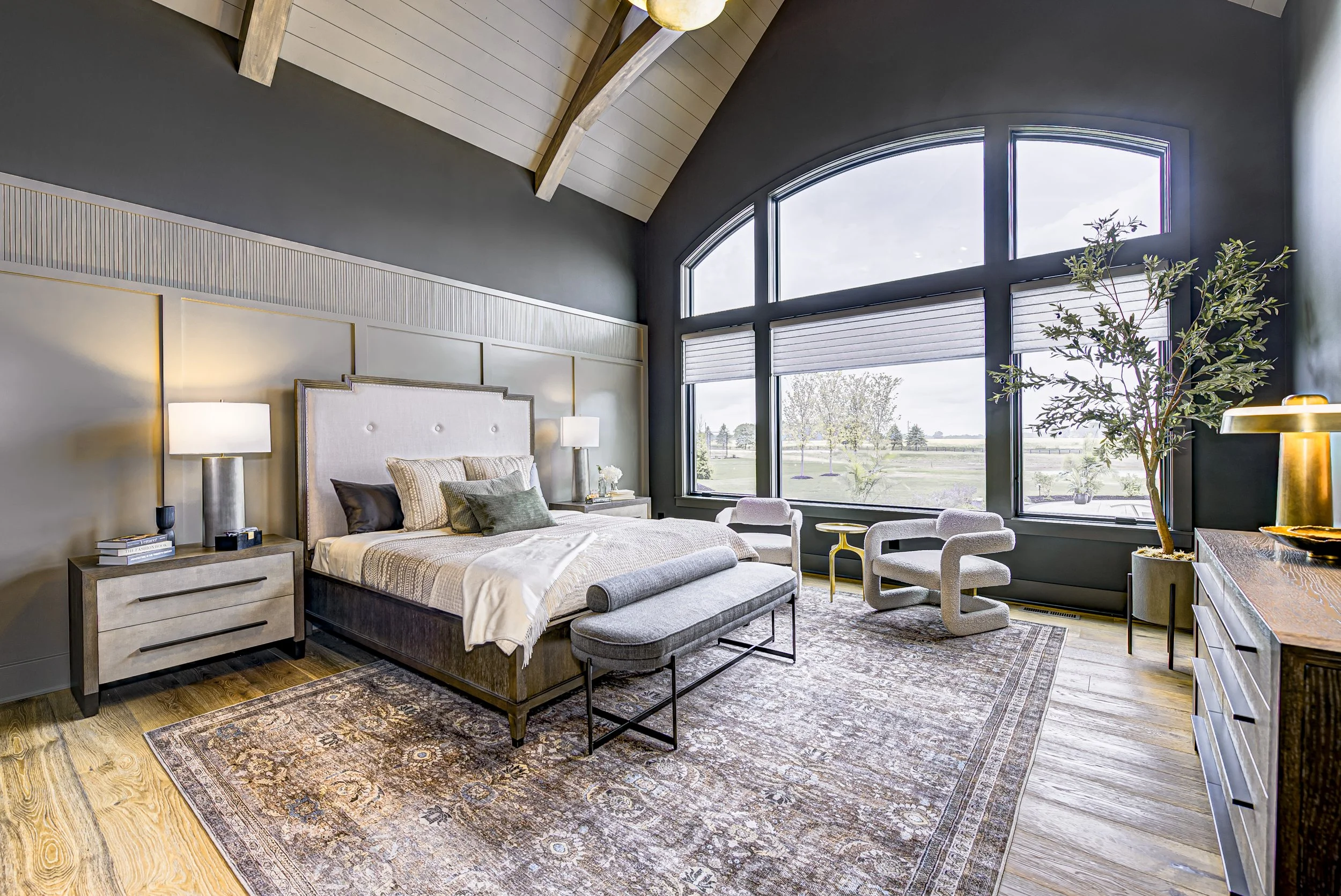
Bed scale and proportion is another area that often gets overlooked. "You can technically fit a king in a 12x12 room, but it will feel like the bed ate the room," Wendy says. "Proportion matters not just for function but for the sense of breathing room a space needs to feel livable."
Visual Weight and Proportional Balance
Scale and proportion aren't only about measurements. Visual weight — how heavy something looks — plays just as big a role in whether a room feels balanced.
Dark colors feel heavier than light ones. Solid shapes feel heavier than open ones. Dense materials like wood and stone feel heavier than glass or metal. A piece of furniture doesn't have to be physically large to feel like it's dominating a room.
Proportional balance means pairing heavier pieces with lighter ones so the room feels visually even. A dark sofa pairs well with a lighter coffee table or open shelving. A large upholstered chair sits comfortably next to a slender floor lamp. Most rooms also benefit from one or two anchor points — a fireplace, a large piece of art, or a substantial furniture piece — that ground the space and give everything else a sense of proportion to relate to.
Balance can be symmetrical, with matching elements on either side of a central feature, or asymmetrical, where a large chair on one side is balanced by two smaller chairs on the other. Both approaches can work beautifully. What matters is that the overall scale and proportion of the room feel harmonious, not lopsided.
Human Scale: Proportion That Fits the People in the Room
A room can follow every proportion guideline and still feel wrong if the furniture doesn't fit the people actually using it. This is called human scale — and it's a core part of getting proportion right.
Seat heights between 16 and 18 inches from the floor allow most people to sit and stand comfortably. Armrests should be proportioned so shoulders can relax naturally — not pushed up or left without support. When you're arranging a room, think about scale and proportion from a seated position, not just when standing. Televisions, artwork, and windows should align comfortably with eye level when you're sitting down.
As households change over time, accessible proportions matter too. Walkways should stay wide enough for easy movement, and seating should allow people to rise without strain. A well-proportioned space today should still work well years from now.
Scale and Proportion Room by Room
Every room has its own scale and proportion guidelines because every room serves a different purpose.
In living rooms, seating pieces should generally sit within eight feet of each other so conversation feels natural. Push furniture too far apart and the proportional relationship between pieces breaks down — the room starts to feel disconnected. Rugs and coffee tables help anchor the arrangement and reinforce the scale of the seating area.
In bedrooms, the bed sets the scale for everything else. Nightstands should be proportioned to align closely with mattress height. Oversized dressers throw off the balance of a small bedroom; pieces that are too small feel out of proportion and insignificant.
In dining rooms, allow about 24 inches of table width per person and at least 36 inches of clearance around the table for chairs and movement.
In bathrooms, spacing around fixtures is often guided by building codes — but thoughtful scale and proportion decisions during a bathroom remodel can dramatically improve how the room feels day to day.
Architectural Scale and Proportion: Let the Home Guide You
The architecture of your home is already communicating something about scale and proportion. Ignoring those signals is one of the most common reasons rooms feel disconnected from their surroundings.
Tall furniture placed in front of low windows breaks the proportional line of the room and blocks natural light. Furniture that crowds a door swing disrupts circulation every single time. Rooms with high ceilings can handle taller furniture and vertical elements that reinforce the scale of the space. Rooms with lower ceilings feel more balanced with lower-profile pieces that preserve an open feeling.
Built-ins are particularly important to the scale and proportion of a room. Whether original to the home or added during a remodel, built-in shelving and cabinetry set a visual rhythm that furniture should complement — not compete with.
Wendy sees the benefit of thinking about architectural scale and proportion from the very beginning of a project. "When design and remodeling happen under one roof, I'm in the conversation from day one. I'm thinking about the finished room while we're still making structural decisions. If a client wants a built-in entertainment wall, I already know what the TV size will be, what furniture it'll live with, and I can spec the built-in to those proportions — not just what fills the wall, but what's in harmony with everything around it. That integration is where the magic happens."
How Scale and Proportion Affect the Way a Room Feels
Getting scale and proportion right isn't just about aesthetics. It affects how a room feels to be in — physically and emotionally.
Wendy's background in yoga and Ayurveda shapes the way she thinks about this. "When proportion is off — when a room feels too crowded or too sparse, when visual weight is distributed unevenly — your nervous system is actually working to process that dissonance. You might not consciously think 'that sofa is too large for that wall,' but your body is registering a low-level tension. You can't fully relax in a space that's asking your brain to solve a visual problem."
Well-proportioned spaces do the opposite. "When everything relates to everything else in a way that feels harmonious, there's nothing to solve. You walk in and your shoulders drop a little. There's ease. That's not just aesthetic — it's physiological."
This matters most in bedrooms and living rooms — the spaces where people go to unwind. If the scale and proportion are working against you, the room can't do its job, no matter how nice it looks.
Test Your Scale and Proportion Before You Commit
Before buying a large piece of furniture, take a few easy steps to test how it will feel in the space.
Tape out the footprint on the floor with painter's tape to see how much room it will actually occupy. Build a cardboard mock-up to get a sense of the height and visual weight. Use an online room planning tool to experiment with different scale and proportion arrangements before spending any money. Or try rearranging what you already have and live with it for a few days to see how the proportions feel in real life.
What looks right in a showroom or a product photo doesn't always translate to the right scale and proportion in your home. Testing first saves time, money, and frustration.
Getting Scale and Proportion Right
A room that feels balanced doesn't happen by accident. It comes from understanding how furniture size, visual weight, and human comfort all work together — and how every piece relates proportionally to the room and the people in it.
Start with the architecture. Size your rug correctly. Choose furniture that fits the scale of the space rather than fighting it. Pay attention to how the room feels when you're actually sitting in it.
When scale and proportion are working the way they should, you'll know it immediately. The room will feel right — calm, balanced, and easy to be in.
Ready to see what a difference scale and proportion can make in your home? The team at Everything Home Designs has helped families across Carmel and Central Indiana create spaces that feel as good as they look. Whether you're starting a full remodel or just trying to figure out why a room isn't working, Wendy and her team are happy to help. Schedule a free consultation today.