
Kitchen Triangle vs. Kitchen Zones: Why Modern Families Need a New Approach
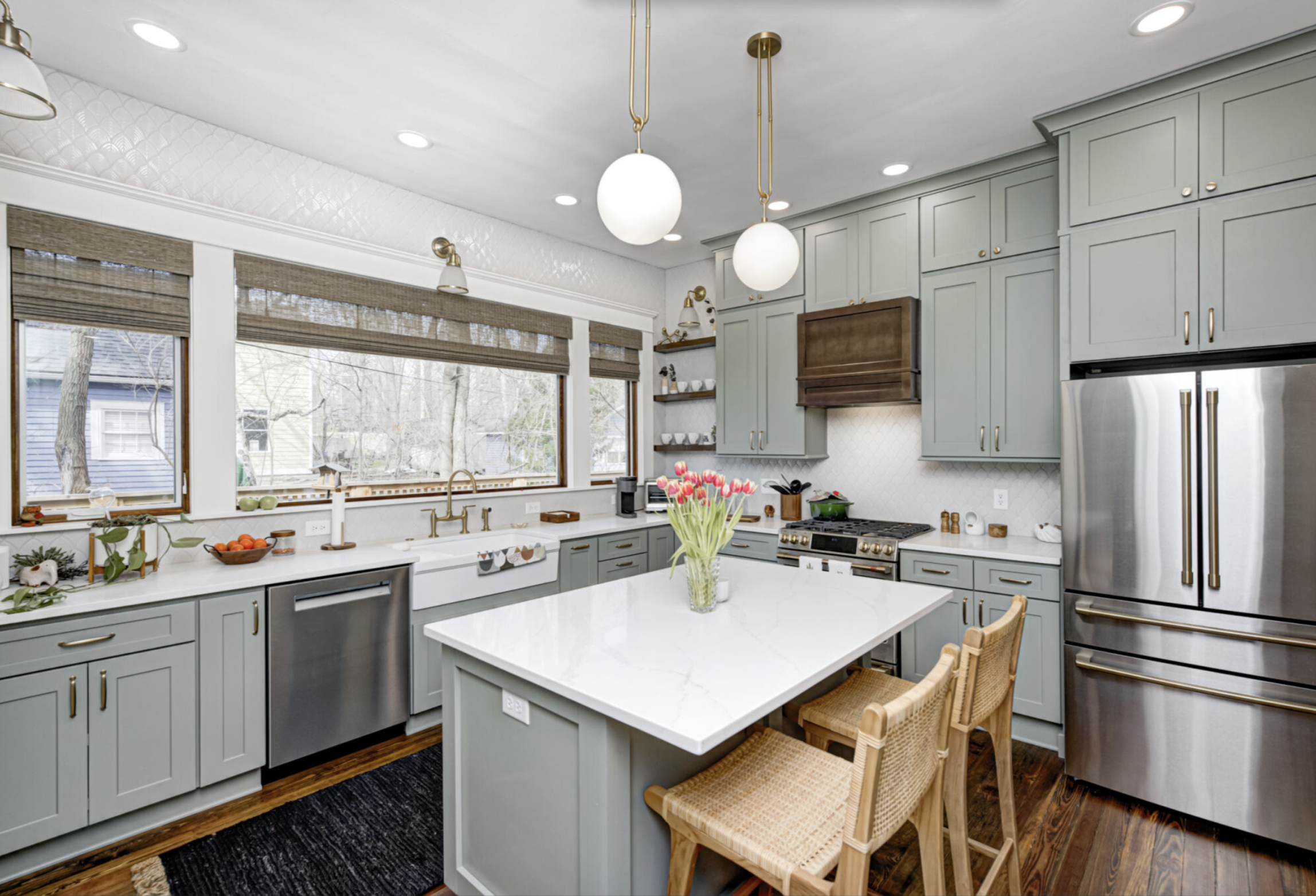
Kitchen Triangle vs. Kitchen Zones: Why Modern Families Need a New Approach
The kitchen is the room that tells you the most about how a family lives. It holds the morning chaos and the Sunday dinner. It's where homework gets done, wine gets poured, and everyone ends up — no matter how many other rooms the house has. And it's the room, more than any other, where a layout that doesn't work costs you something every single day.
For decades, kitchen design revolved around one guiding idea: the work triangle. The sink, the stove, and the refrigerator, arranged so one person could move between them efficiently. At the time, it made perfect sense. Kitchens were smaller, one person was usually cooking, and the room existed to produce meals — not to hold half your life.
That's not how kitchens work anymore.
Today's kitchens are the center of the home. People cook together, help with homework, entertain guests, charge devices, and start every morning there. With so much happening at once, the old triangle often can't keep up. That's why most designers — including Wendy Langston, founder and CEO of Everything Home Designs in Carmel — now focus on kitchen work zones instead.
"The kitchen doesn't stop working all at once," Wendy says. "It degrades slowly, one workaround at a time, until the family has reorganized their entire routine around a room that isn't doing its job."
Understanding the difference between the traditional kitchen triangle and a zone-based layout can help you make smarter decisions before starting a renovation. These ideas also connect directly to the broader principles in our guide to spatial planning and room flow — because how your kitchen is laid out affects how your entire home feels to live in.
The Kitchen Work Triangle: What It Was Designed to Do
The kitchen work triangle was introduced in the 1940s when researchers began studying household efficiency. Kitchens were utilitarian spaces, designed around one person cooking for the household. The most efficient arrangement, they found, placed the refrigerator, sink, and stove within close proximity so the cook could move easily between the three points.
Classic triangle guidelines recommended that each side measure between four and nine feet, with the total distance kept within a specific range. When it worked, it minimized unnecessary steps and kept the cooking process moving smoothly.
The triangle can still make sense in certain situations. Smaller kitchens with limited square footage — especially when primarily used by one person — can still benefit from this simple layout. In those spaces, the triangle remains a practical framework even as you update cabinetry, materials, and lighting during a kitchen remodel.
But once a kitchen gets larger, or more than one person is regularly using it, the triangle starts to show its limits fast.
Why the Triangle Breaks Down in Modern Kitchens
The biggest assumption built into the kitchen triangle is that one person is cooking. That assumption no longer reflects how most households actually operate.
Wendy sees the result constantly when she walks into homes for the first time. "What that looks like in practice: a primary prep zone that has become a landing zone for everything — mail, devices, kids' snacks, items waiting to be put away — so that the cook has maybe 18 inches of actual working surface during dinner prep. A refrigerator that opens into a traffic lane so that every time someone gets a drink, it interrupts whoever is cooking. An island that was meant to create flow but instead created a barrier that splits the kitchen from the rest of the living space."
When several people move through the same triangle at the same time, traffic overlaps and congestion builds. Someone reaching for the refrigerator interrupts the person cooking. Guests standing near the island block access to the sink. What was designed as an efficient pathway becomes a bottleneck.
"When we name that in a consultation — when we point to the landing zone and say 'this is your prep surface, and it's being used for everything except prep' — there's almost always a recognition that's almost physical. They knew something was wrong. They just didn't have the language for it yet."
The Zone-Based Approach to Kitchen Design
Instead of organizing the kitchen around three appliances, a zone-based layout organizes it around the activities that actually happen there. Each zone supports a specific task and includes the tools, appliances, and storage needed to complete it.
Typical kitchen zones include a preparation area, a cooking area, a cleaning area, a serving area, and a storage area. Larger kitchens might also include a beverage station, a baking center, or a pantry zone, depending on how the household cooks and entertains.
By separating tasks into zones, the kitchen becomes much easier to use when multiple people are present. A preparation zone might include ample counter space, cutting boards, knives, and mixing tools positioned close to the refrigerator and sink. The cooking zone centers around the range and provides easy access to cookware, utensils, and spices. The cleaning zone includes the sink, dishwasher, and trash or recycling storage.
When these zones are designed thoughtfully, people move through the kitchen naturally without constantly crossing paths.
Designing Kitchens for Multiple Users
Modern kitchens rarely serve just one cook — and the layout needs to reflect that.
Wendy worked with a couple whose kitchen had a large, beautiful island, well-positioned by most standard measures. But every time they hosted, the same thing happened. Guests clustered around the island, which put them directly in the path of the cooking zone. The hosts were either constantly navigating around people or mentally checking out of the conversation to cook.
"What was missing was a dedicated serving and grazing zone that was adjacent to but distinct from the cooking workspace. We added a built-in beverage station and extended the counter on the far side of the kitchen — positioned so that guests had a natural place to gather, pour drinks, and graze on appetizers without ever crossing into the prep and cooking zone. We added bar-height seating oriented toward that station rather than toward the range, so the social energy of the room had a place to collect that wasn't directly in the cook's way."
The cooking zone stayed intact. But the hosting zone now had its own identity. "They told us they'd hosted more in the six months after the remodel than in the three years before it — not because the kitchen got bigger, but because it finally worked for two things at once."
A zone-based layout also makes everyday family life easier. Kids can grab snacks or do homework at the island while dinner is being made. One person can prep vegetables while another handles the stove. Everyone has a place to be without getting in each other's way. When homeowners pursue a whole home remodel, rethinking the kitchen layout is often one of the highest-impact changes because it improves both daily routines and how the whole house feels.
Landing Space: The Small Detail That Makes a Big Difference
One concept that gets overlooked in kitchen planning is landing space — small areas of counter placed next to major appliances where things can be set down safely.
Groceries need somewhere to land when they come out of the refrigerator. Hot dishes need a safe spot when they come out of the oven. Even a microwave benefits from nearby counter space.
Wendy describes a client in Carmel with a well-appointed kitchen — good appliances, ample storage, a functional layout by most standard measures. But she kept avoiding real meals on weeknights because cooking felt harder than it should.
"When we walked the workflow with her — literally walking through the motions of making a meal — we found it immediately. There was no landing space next to the range. Every time something came off the stove, it had to travel across the kitchen to reach a surface."
The fix was moving the refrigerator to the opposite wall and replacing a filler strip beside the range with 24 inches of open countertop. "She called it the best thing we did in the entire remodel. Not the new hardware, not the backsplash, not the updated lighting — the counter next to the stove. Because that surface is in use every single time she cooks, and every single time it's there, the meal is easier than it was before."
Without proper landing space, kitchens become cluttered and frustrating to use. It's a small design detail with an outsized impact on everyday life.
Kitchens That Support Modern Life
Today's kitchens support a wider range of activities than ever before, and thoughtful zone planning reflects that reality.
Many families now incorporate small workspaces into their kitchens — a spot where kids can do homework while dinner is being made nearby. Charging drawers and built-in desk areas keep devices organized without cluttering the main workspace.
Beverage and coffee stations have become increasingly popular for good reason. By creating a dedicated zone for coffee makers, mugs, and drink preparation, you prevent morning routines from colliding with cooking activity. It's a simple separation that reduces daily friction considerably.
Pantries have also evolved. Instead of simply storing food, a well-designed pantry can function as a prep area or appliance garage — a place where mixers, air fryers, and other equipment can be used and stored without cluttering the main kitchen. Wendy notes that the appliance garage is consistently one of the solutions clients are most skeptical about — until they live with it. "Clients hear 'appliance garage' and picture something from a 1987 kitchen catalog. What we actually design is a fully integrated cabinet section with power inside and dedicated zones for every countertop appliance a family actually uses. Six months after move-in, it's consistently one of the first things they mention when they're telling friends about the house."
These kinds of additions are often best addressed during a kitchen remodel or whole home renovation, when the layout can be rethought from the ground up.
Kitchen Layout in Carmel and Central Indiana Homes
Regional lifestyle and home styles create specific kitchen planning considerations that Wendy and her team deal with every day.
Mudroom adjacency is one of the most common friction points in Carmel and Hamilton County homes — particularly builds from the late 1990s through the 2010s, where the garage entry feeds directly into the kitchen.
Wendy worked with a West Carmel family with three kids in three different activities. The garage entry opened directly into the corner of the kitchen between the refrigerator and the island. Every afternoon, kids came through that door with bags, sports equipment, and snacks — straight through the primary cooking and prep zone on their way to the basement stairs. "Between 3:30 and 6 PM, when dinner was being made, that kitchen had a constant stream of cross-traffic running right through the heart of the workspace. The mom described it as feeling like cooking in a hallway."
The fix wasn't a full remodel. They added a partial arched wall to create a defined drop zone corridor that redirected afternoon traffic into a contained mudroom rather than through the middle of the kitchen. "The cooking zone stayed exactly where it was. We just gave it back its boundaries. She told us two weeks after completion that she'd made dinner every night since — real dinners — and it hadn't felt stressful once."
Basement access is another layout factor in many Midwest homes. When stairs to the basement are positioned near the kitchen, foot traffic between levels can interrupt cooking activity. Thoughtful planning during a basement remodel can improve that circulation and make the transition between floors feel natural rather than disruptive.
Entertaining is also a major part of life in Central Indiana. Holiday gatherings, neighborhood dinners, and casual Saturday nights that somehow always end up in the kitchen are the norm — which is why generous islands, flexible serving zones, and clear separation between the cooking workspace and the social space matter so much here.
How Kitchen Design Changes at Different Life Stages
The kitchen that works for a family with young kids is almost never the right kitchen for empty nesters — and good zone planning accounts for that.
When designing for families with young children, Wendy's primary focus is managing the controlled chaos. "Kids are in the kitchen constantly — getting snacks, doing homework at the island, coming in from outside, wanting to help cook. The layout has to accommodate the cook as primary, but it also has to account for the reality that three other people are regularly in that space doing three different things." That means substantial island seating, clear sightlines from the cooking zone to where kids gather, and a snack zone that's accessible to kids without routing them through the prep area.
With empty nesters or couples who entertain, the entire approach shifts. "The kitchen is no longer a family management system — it's a stage. It's where the hosts perform, where guests gather, where the quality of the experience is inseparable from the quality of the space." Storage becomes about curation rather than volume. Social zones get more deliberate. The relationship between the kitchen and the dining or living space becomes central to the design.
"What doesn't change between those two clients is the fundamental principle: the kitchen has to be designed for the life actually being lived in it, not the life a floor plan assumed."
Planning Your Own Kitchen Layout
If you're considering a kitchen renovation, start by simply observing how your current kitchen actually functions. Pay attention to where congestion builds and where certain tasks feel awkward. Those friction points almost always point directly to the opportunity.
Wendy's most revealing question isn't "what frustrates you about your kitchen?" It goes one level deeper: "When you're cooking dinner, where does everyone else in the family end up — and where do you wish they were?"
That question maps the entire social and functional dynamic of the kitchen in a way that a general frustrations list never quite reaches. Sometimes the answer is that everyone crowds in and the cook can't move — which means the kitchen needs defined zones and better boundaries. Sometimes everyone disappears to other rooms, leaving the cook isolated — which means the kitchen is too closed off and needs more openness and connection to the rest of the house.
"Both of those are layout problems. But they require opposite solutions. You'd never know which one you were solving without asking the right question first."
Other questions worth asking yourself: Do multiple people cook or prepare food at the same time? Are appliances positioned where they're most convenient, or are you constantly carrying things further than you should? Does the kitchen provide enough counter space for how you actually cook? Are there spots where daily traffic regularly interrupts the cooking process?
Mapping those patterns before making layout decisions can save you from solving the wrong problem. For real-world inspiration, browsing our project portfolio shows how thoughtful kitchen planning plays out across a range of Carmel and Central Indiana homes.
A Smarter Way to Design Kitchens
The kitchen work triangle served its purpose for a long time. But modern family life requires a more flexible approach — one that organizes the kitchen around how people actually use it, not just around three appliances.
Zone-based planning creates kitchens that are more comfortable, more efficient, and more welcoming for everyone in the home. When design and construction happen together under one roof, the kitchen you end up with is one that was built around your life — not around a generic floor plan.
At Everything Home Designs, thoughtful kitchen planning is at the center of every project. Whether you're refining a single room or reimagining your entire home, our team works closely with families throughout Carmel and Central Indiana to create spaces that feel as good as they look. When you're ready to talk through your ideas, we'd love to help you get started.